Thinking About Stretching
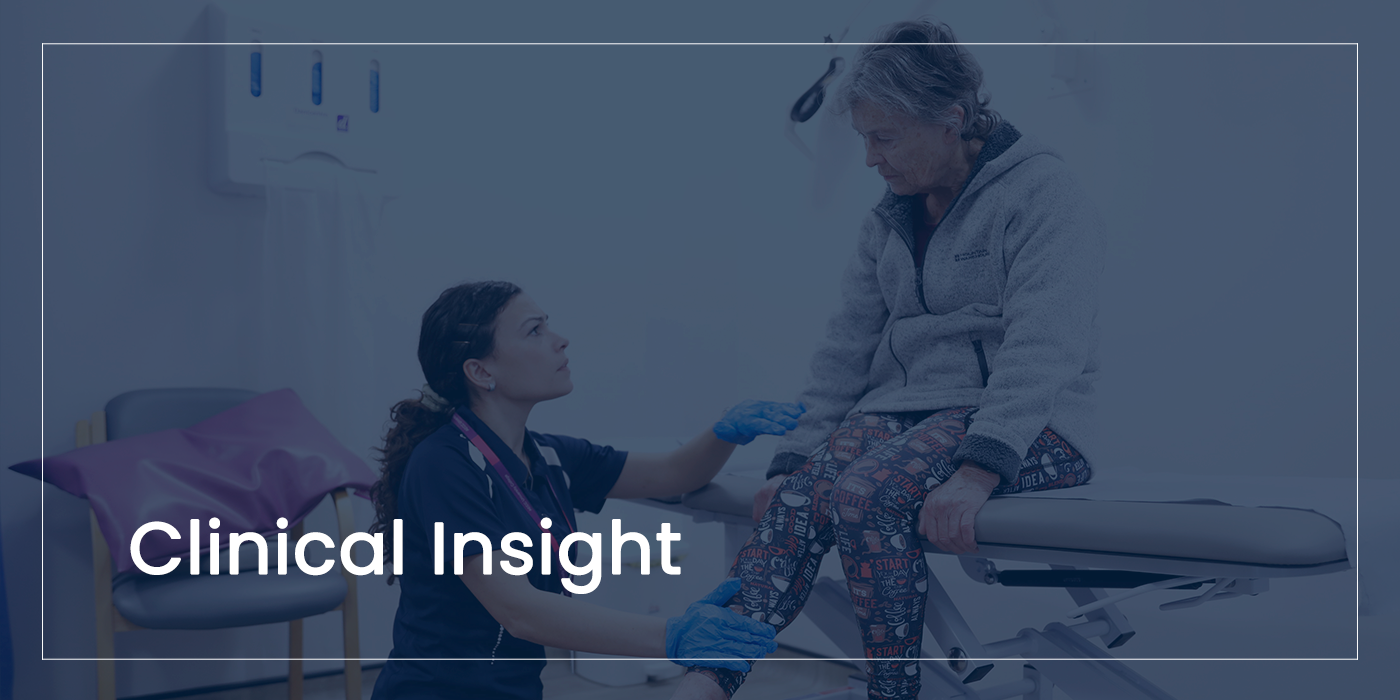
In this month’s Clinical Insight, we consider the role of stretching in musculoskeletal pain and disability. This piece is intended as a commentary and reflection rather than an in-depth exploration.
Exploring the Effects of Stretching
Stretching has long been a common musculoskeletal (MSK) intervention for a range of disorders, aiming to improve patient outcomes. Stretching of the musculotendinous unit occurs through its viscoelastic properties. Elastic elements return to their original length after being stretched, whereas viscous properties, given sufficient time and load, allow the tissue to adapt and gain a new length.
Stretching may inhibit muscle contraction, as the sensitivity of Golgi tendon organs can lead to inhibition of motor neurons, potentially negatively affecting outcomes. Therefore, when planning strength-based activities, stretching may not be the most appropriate pre-session intervention (Costa et al., 2008).
Clinical Reasoning: Is the Muscle Truly “Tight”?
Whether increased stretch, and therefore muscle length, contributes to a meaningful outcome ultimately links back to clinical reasoning. The starting point is the question: is the muscle truly “tight”? This may reflect an experience of tension or hypertonicity that contributes to a pain experience. Stretching as an intervention for painful soft tissue conditions has been shown to produce some favourable outcomes (Konrad et al., 2025).
These effects may be due to several mechanisms, including reduced nociceptive responses through relaxation, improved mobility and confidence, therapeutic engagement in exploring the pain response, and activation of descending inhibitory pathways, among others. The precise mechanism remains unclear; however, when tissue is assessed to be in a shortened state, stretching may be worth considering for improved mobility.
Interpreting Spasm and Muscle Stiffness
To explore potential mechanisms further, the spasm model proposes that spontaneous electrical activity can lead to local ischaemia. This ischaemia results in inadequate energy availability for sodium and potassium channels, leading to a sustained state of non-relaxation. Energy is required for muscle relaxation, and this cannot be achieved in the presence of ischaemia (Coletti, 2022). This mechanism may be seen in many spinal conditions, where muscle tone is influenced by posture, threat, fear, and related factors. In such cases, tissues require movement to restore energy, allowing relaxation to occur; as movement increases, ischaemia reduces and the cycle is disrupted.
This may also explain the effects of hands-on therapeutic techniques, which can provide mechanical energy and reduce tone through therapeutic interaction. Muscles of the spine generally exhibit higher resting tone when assessed via surface EMG, suggesting that the sensation often described as “spasm” or “stiffness” may reflect ischaemic muscle activity. Pain associated with spasm may arise from sensitised nociceptors due to locally released neuropeptides, further driving a protective muscular response.
Why Context Matters in Stretching
Muscles may also lose relative length when maintained in a shortened position, for example following a contraction-based injury. Skeletal muscle undergoes continuous adaptation to its mechanical environment. Sarcomeres are arranged in parallel, with myosin sliding along actin filaments. Adaptation to shortening reduces fibre length and restricts natural lengthening. Due to viscous properties, this can be improved through the application of appropriate load and energy.
For this reason, stretching as a pre-activity intervention for power-based activities is commonly avoided. Instead, more ballistic or dynamic approaches are often preferred to improve body temperature, metabolic efficiency, oxygen uptake, and blood flow (Gil et al., 2019). In contrast, stretching following immobilisation is generally considered beneficial, and addressing pain–spasm responses in certain spinal conditions may also be valuable as part of a multifaceted treatment approach.
References
- Coletti, R.H., 2022. The ischemic model of chronic muscle spasm and pain. European Journal of Translational Myology, 32(1), p.10323.
- Da Costa, B.R. and Vieira, E.R., 2008. Stretching to reduce work-related musculoskeletal disorders: a systematic review. Journal of Rehabilitation Medicine, 40(5), pp.321-328.
- Gil, M.H., Neiva, H.P., Garrido, N.D., Aidar, F.J., Cirilo-Sousa, M.S., Marques, M.C. and Marinho, D.A., 2019. The effect of ballistic exercise as pre-activation for 100 m sprints. International Journal of Environmental Research and Public Health, 16(10), p.1850.
- Konrad, A., Nakamura, M., Sardroodian, M., Aboozari, N., Anvar, S.H. and Behm, D.G., 2025. The effects of chronic stretch training on musculoskeletal pain. European Journal of Applied Physiology, 125(8), pp.2037-2048.